The English language of the United States and its geographical and social dialects, and other languages. Topics in linguistics, philology, translatology (traductology), and country studies.
El idioma inglés de Estados Unidos y sus dialectos geográficos y sociales, y otras lenguas. Temas de lingüística, filología, traductología y paisología.
Английский язык США, его географические и социальные диалекты, а также другие языки. Темы по лингвистике (по языкознанию, по языковедению), филологии, переводоведению (транслятологии) и страноведению.
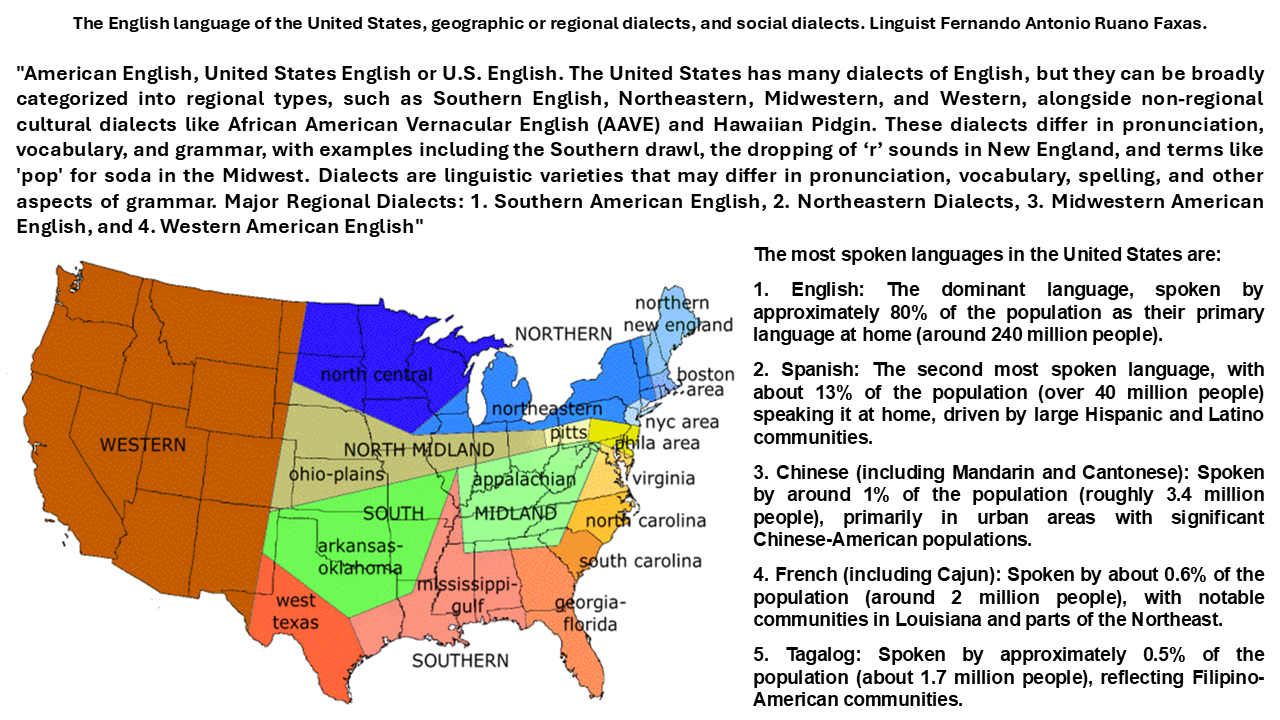
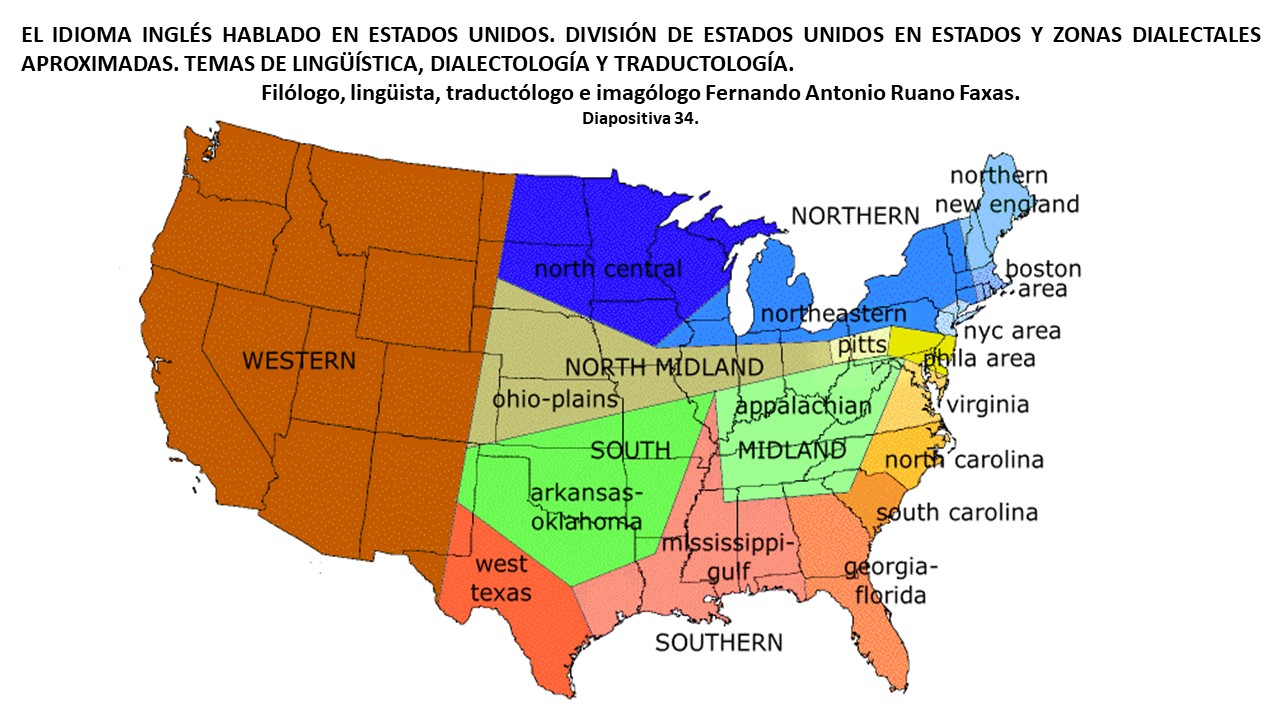

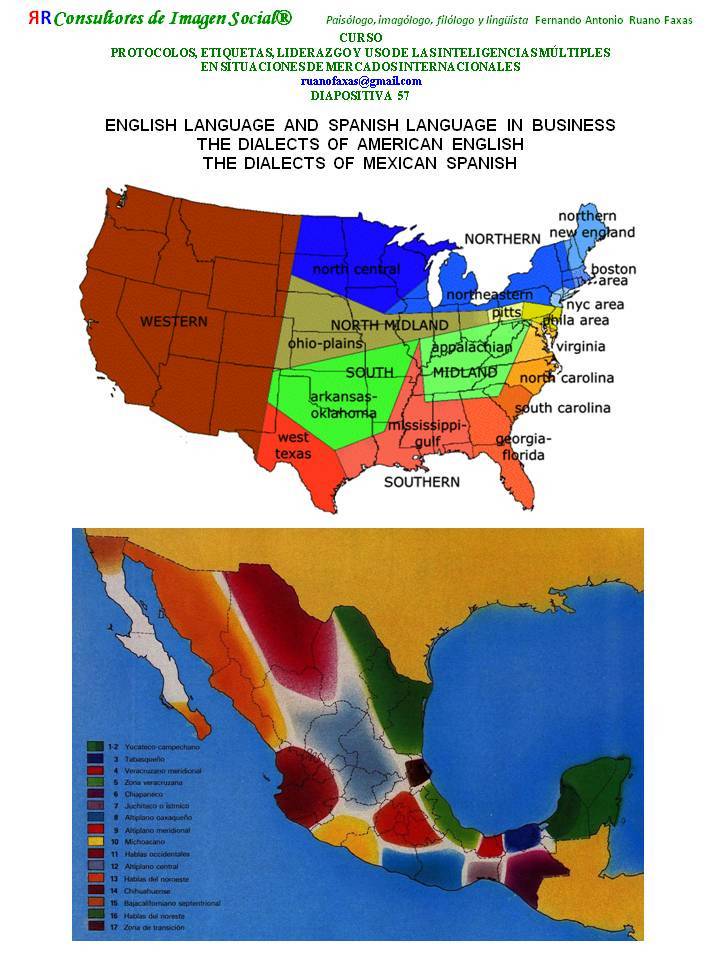
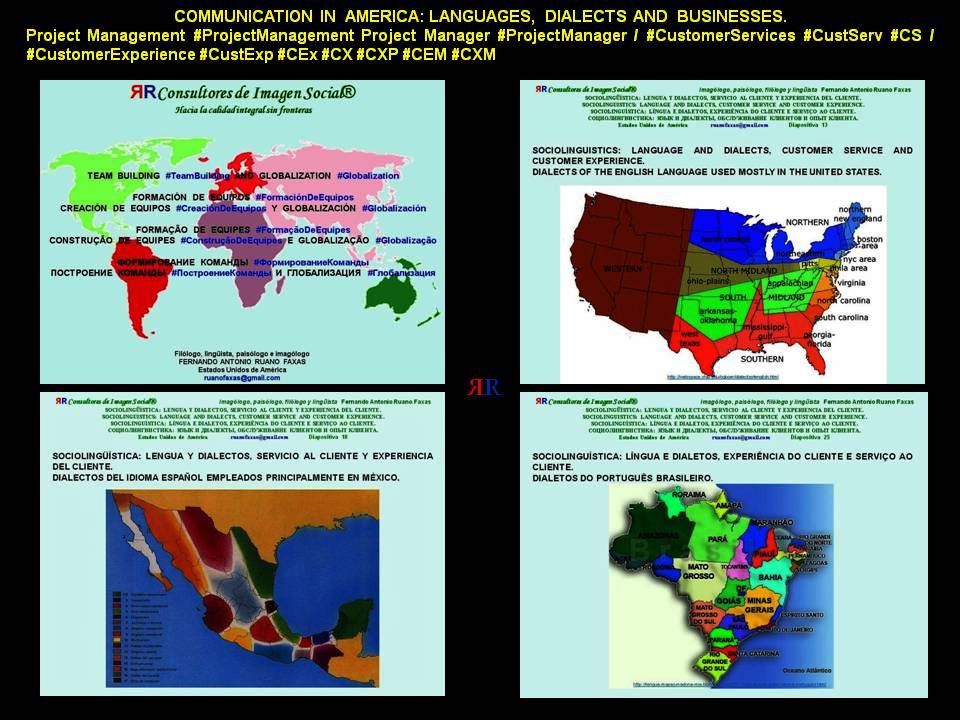
THE ENGLISH LANGUAGE OF THE UNITED STATES AND ITS GEOGRAPHICAL AND SOCIAL DIALECTS, AND OTHER LANGUAGES. TOPICS IN LINGUISTICS, PHILOLOGY, TRANSLATOLOGY (TRADUCTOLOGY), AND COUNTRY STUDIES.
[…] Don’t confuse yourself and don’t confuse other people […] United States of America, population: 340,110,988 […] education and culture: 93 million are illiterate: 50 million are functionally illiterate, 43 million are illiterate […] 300 or 500 religions, apart from the sects […] 350,000 religious congregations […]
[…] United States. Currently, approximately 500 languages are spoken. Of these, approximately 237 are the most widely spoken, including 197 indigenous languages and 40 non-indigenous languages. The most spoken languages in the United States are: English, Spanish (second most spoken language), Chinese (including Mandarin and Cantonese), French (including Cajun), and Tagalog […]
[…] United States does not have an official language at the federal level. Historically, the United States has not had an official language at the federal level. English has always served as the de facto national language, and government business has been primarily conducted in English. However, this changed in March 2025 with the signing of an executive order. On March 1, 2025, President Donald Trump signed an executive order designating English as the official language of the United States. Scope and effect: An executive order is a directive to the federal executive branch. Legal experts note that this declaration’s power is limited and does not have the same force as a law passed by Congress. It affects how federal agencies conduct business but does not have jurisdiction over state or private business […]
[…] What are the differences between an “official language” and a “national language”? An official language is the language designated for use in government and legal contexts, while a national language is a language that is symbolic of a nation’s culture and identity, often spoken by a large portion of the population but not necessarily mandated for official use. An official language is legally established for administrative purposes, such as laws and government documents, and is sometimes a non-indigenous language. A national language, on the other hand, is chosen for its widespread use and cultural significance to foster a sense of national unity, though it might not have a legal mandate for government operations […] Official Language. Function: The language used by the government for official business, laws, courts, and government communications […] National Language. Function: A language that serves as a cultural symbol, unites the people, and embodies their shared heritage and identity […]
EL IDIOMA INGLÉS DE ESTADOS UNIDOS Y SUS DIALECTOS GEOGRÁFICOS Y SOCIALES, Y OTRAS LENGUAS. TEMAS DE LINGÜÍSTICA, FILOLOGÍA, TRADUCTOLOGÍA Y PAISOLOGÍA.
[…] No te confundas y no confundas a los demás […] Estados Unidos de América, población: 340.110.988 […] educación y cultura: 93 millones son analfabetos: 50 millones son analfabetos funcionales y 43 millones son analfabetos […] 300 o 500 religiones, aparte de las sectas […] 350.000 congregaciones religiosas […]
[…] Estados Unidos. Actualmente se hablan aproximadamente 500 idiomas. De estos, aproximadamente 237 son los más hablados, incluyendo 197 lenguas indígenas y 40 lenguas no indígenas. Los idiomas más hablados en Estados Unidos son: inglés, español (el segundo idioma más hablado), chino (incluidos el mandarín y el cantonés), francés (incluido el cajún) y tagalo […]
[…] Estados Unidos no tiene un idioma oficial a nivel federal. Históricamente, Estados Unidos no ha tenido un idioma oficial a nivel federal. El inglés siempre ha sido el idioma nacional de facto, y las actividades gubernamentales se han llevado a cabo principalmente en inglés. Sin embargo, esto cambió en marzo de 2025 con la firma de una orden ejecutiva. El 1 de marzo de 2025, el presidente Donald Trump firmó una orden ejecutiva que designaba el inglés como idioma oficial de Estados Unidos. Alcance y efecto: Una orden ejecutiva es una directiva dirigida al poder ejecutivo federal. Los expertos legales señalan que el poder de esta declaración es limitado y no tiene la misma fuerza que una ley aprobada por el Congreso. Afecta la forma en que las agencias federales realizan sus actividades, pero no tiene jurisdicción sobre las empresas estatales ni privadas […]
[…] ¿Cuáles son las diferencias entre un “idioma oficial” y un “idioma nacional”? Una lengua oficial es la lengua designada para su uso en contextos gubernamentales y legales, mientras que una lengua nacional es una lengua que simboliza la cultura e identidad de una nación, a menudo hablada por una gran parte de la población, pero no necesariamente obligatoria para su uso oficial. Una lengua oficial se establece legalmente para fines administrativos, como leyes y documentos gubernamentales, y en ocasiones es una lengua no indígena. Una lengua nacional, por otro lado, se elige por su uso generalizado y significado cultural para fomentar un sentido de unidad nacional, aunque podría no tener un mandato legal para las operaciones gubernamentales […] Idioma Oficial. Función: La lengua utilizada por el gobierno para asuntos oficiales, leyes, tribunales y comunicaciones gubernamentales […] Idioma Nacional. Función: Una lengua que sirve como símbolo cultural, une al pueblo y encarna su herencia e identidad compartidas […]
 ruanofaxas
Leave a comment